


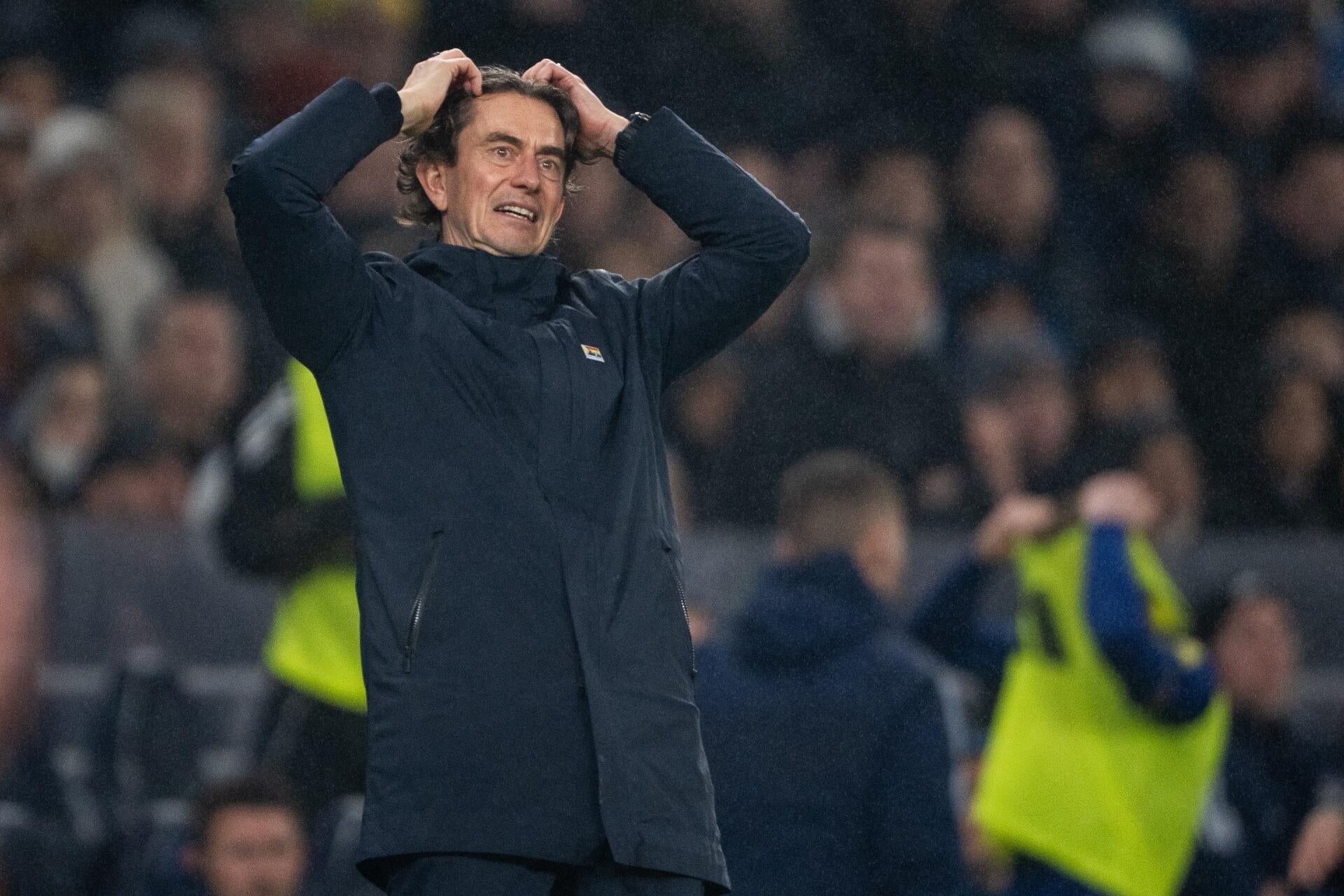
As the season hits its midpoint, the prognosis for Tottenham Hotspur is as clear as day. They faced Newcastle United recently, and if you watched, you would have seen a team that felt a step behind. They appeared sluggish, a defense riddled with problems, and an offense devoid of creativity. This matchup highlighted yet another disappointing chapter in their Premier League journey.
Thomas Frank’s time at the helm of Spurs has drawn to a close following this lackluster performance. It’s important to note that he didn’t create all of Spurs’ challenges. His term saw him grappling with a serious injury crisis, compounded by captain Cristian Romero’s suspension following a red card in a previous defeat against Manchester United. He correctly pointed out that this very team faced relegation troubles the previous season, implying a limited potential lurking beneath the current squad’s surface. However, Frank didn’t do himself any favors either, embodying a rare case of someone elevated to a higher role without truly justifying that step.
His tenure is noteworthy, but for all the wrong reasons. The expectation was that he would provide a solid alternative to Ange Postecoglou who focused on building an attacking team while neglecting defensive aspects. Frank was brought in to rectify this, given his record at Brentford, where he established a solid defense capable of both repelling attacks and exploiting set pieces. His approach should have signaled that Spurs would find equilibrium on both fronts.
Yet, perceived pragmatism didn’t equate to real effectiveness. Frank inherited issues but failed to amend what was within his control. A noticeable lack of progress characterized his brief stint, making it evident that improvement was sorely needed. His performance metrics—averaging a dismal 0.1 more points per match compared to Postecoglou—do not paint a hopeful picture for fans. Additionally, the offensive output showed marginal improvement, yet the defensive vulnerabilities persisted, leaving Spurs languishing in 13th place for expected goals against.
Points per game | 1.1 | 1.0 | 1.5 |
Goals per game | 1.4 | 1.7 | 1.7 |
Expected goals per game | 1.1 | 1.6 | 1.6 |
Goals against per game | 1.4 | 1.7 | 1.4 |
| Expected goals against per game | 1.5 | 1.7 | 1.5 |
Even a superficial glance during matches reveals Tottenham’s defensive frailties. Despite having experienced defenders, they looked out of sync, a direct outcome of Frank’s failure to cement tactical foundations. Frustration quickly spread among players whenever they conceded, and fans were more inclined to boo than cheer.
Frank’s record in the attacking third mirrored this underperformance. His strategy lacked depth, relying too heavily on wing play to generate opportunities, especially after key player James Maddison’s ACL injury sidelined him prior to the season. This led to a reliance on set pieces, and the attacking plan failed to materialize. Early-season performances in which they outpaced expected goals were more a product of fortune than skill.
Before long, Spurs were left without ideas. Basic attacking plays went awry, while their game strategy did not prioritize creating set pieces, an area where they had previously shown some strength. Too often, Frank’s conservatism stifled their play. Instead of earning showcases, matches morphed into exercises of frustration. A notable example was their 1-0 loss to Chelsea, where they managed a paltry three shots and only 0.12 expected goals, while Chelsea claimed the lion’s share of opportunities.
The final moments of Frank’s time epitomized this struggle. After leveling against Newcastle, his side failed to defend a simple counter, allowing Anthony Gordon to slice through before Jacob Ramsey scored. This incident reflected a broader narrative—Tottenham merely existed on the pitch without a clear purpose.
Despite showing flashes of attacking potential intermittently, the team ultimately reverted to a rigid defensive setup they couldn’t uphold. Frank’s attempts to adopt a pragmatic style revealed the dangers of overly cautious tactics. No matter how steadily one tries to mitigate risks, pulling away from offensive efforts while the team finds momentum is counterproductive.
With Frank steering the ship, Spurs appeared to drift aimlessly, as if participating in the league solely for attendance. While earning titles is not tied to style points, Frank demonstrated a reality where losing becomes inevitable without engaging play. Fans grew frustrated, echoing their discontent with terms like “boring Tottenham,” as entertainment value dwindled.
Despite a squad not suited for Champions League contention, Frank’s leadership did little to lift spirits. A single instance of hope during a UEFA Super Cup encounter stood out against an otherwise bleak backdrop. His dismissal prompts critical reflection among Spurs’ leadership, particularly as new faces evaluate a situation shaped by years of mismanagement, evidenced by their last Champions League showing now feeling like a distant memory.