









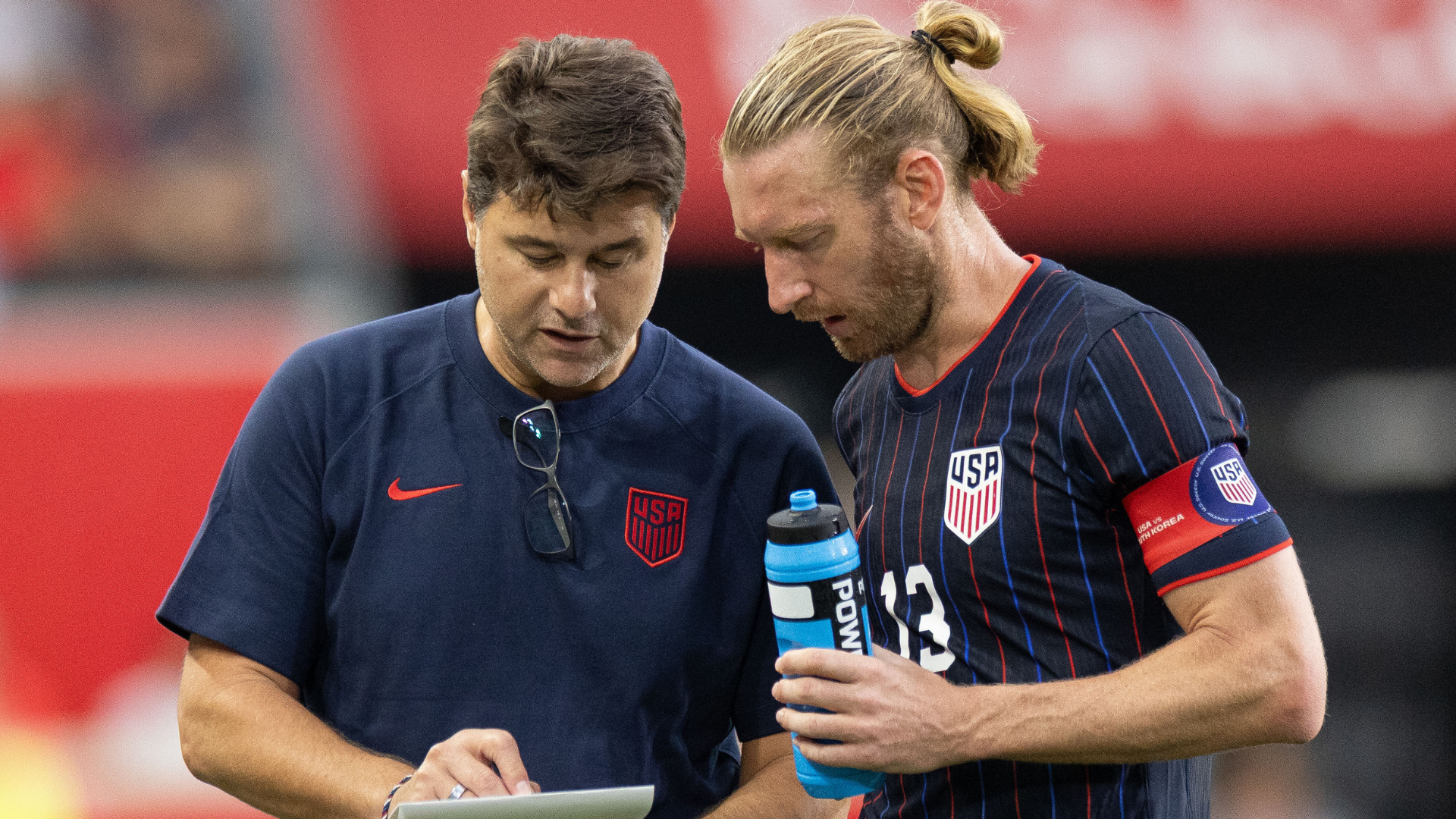
The 2025 journey for the United States men’s national team was fraught with uncertainty, particularly as they prepared to host the World Cup. There were concerns about their ability to score, defend, and establish a cohesive identity under the new management of Mauricio Pochettino. However, a pivotal moment came in September when Tristan Blackmon, Tim Ream, and Chris Richards debuted together in a back three during a friendly against Japan. This match ended in a 2-0 victory, igniting a five-match unbeaten streak, during which the USMNT faced opponents gearing up for the World Cup.
Tim Ream reflected on this tactical shift in a recent episode of Call it What you Want, a CBS Sports Golazo network podcast.
“The decision to employ three center backs was brilliant. It seemed to give players more freedom in a fluid four at the back. With three center backs, we felt a lot more secure,” Ream explained.
This shift not only bolstered defensive stability but also allowed fullbacks to charge forward into the attack, creating more opportunities for Christian Pulisic and Folarin Balogun to score. The team’s new strategy fostered a repeatable system and provided the flexibility to revert to a back four if necessary.
“Having that flexibility opens up options to adapt during the game. It boosts each player’s understanding of their role and where they need to be positioned,” Ream elaborated.
Why was the change essential?
With key midfielder Tyler Adams sidelined, the USMNT explored different options to sufficiently protect the defense. Ultimately, they came to the realization that Adams is irreplaceable in a direct switch. This necessitated a change in their strategy.
Pochettino’s approach shows he’s focused on finding the right system for the players instead of forcing an ineffective one. With 70 players called up during his managerial tenure so far, he’s thoroughly evaluated the roster. Currently, this setup is optimized for success while Adams continues his recovery from an MCL injury with Bournemouth. As the March international break approaches, Pochettino needs to strategize for continued play without his standout defensive midfielder.
Setting new standards
The transformation has given the USMNT a clear identity and made their system more consistent. Despite Pochettino rotating players in his starting eleven, performance levels have remained steady, and players have become more familiar with their tactical roles. This marks a significant shift from the confusion that sometimes plagued players during Gregg Berhalter’s tenure. With ample time before the World Cup, Pochettino has started embedding his tactics, ready to test them in upcoming friendlies against Belgium and Portugal. This is a crucial phase in pushing beyond the round of 16, and under Argentine leadership, the USMNT is gaining momentum.



